
About
Our history
Our history spans years of magazine and book publishing; mainly magazines concerned with the creative arts. That used to be known as art and design, professional and in education. A ‘magazine’ format usually means a collection of items that share a common theme. In recent years the term ‘creative arts’ has broadened to include many related things. MediaX will include many subjects that form our collective social fabric.
… and now we’re here
MediaX is an eclectic collection of interesting things with design and creativity at its core. The content may be from the natural world or from the built environment. As George Harrison sang; ‘within you and without you’. In its simplest form, the process of design is the act of thinking. Our thoughts are pictures of the mind; some moving, some still. Life unfolds in interesting ways. Good design arises from clear and positive thinking, something we have showcased over many years in our magazines and books. Creative Arts Education has been a focus through our ADERG project.
Sadly there is no longer an annual ADERG book. The world of media and communication has moved on. Our magazines: Design World, Design Ink, Design Graphics and DG Magazine are in the past. We’ve moved on too, and we hope that you will find this collection interesting. Stay with us as we add thoughts, observations, ideas and pictures. We will search through our archives and create essays in words and pictures. As with all things, we don’t know what’s ahead, but we’ll try to make the journey interesting and worthwhile.
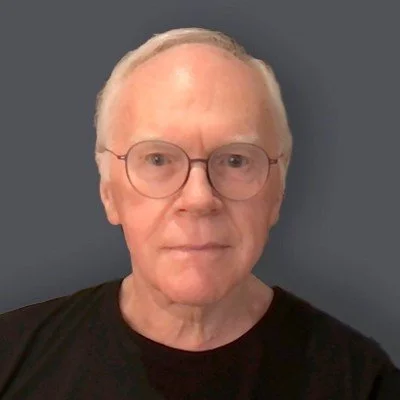
This is me. Born in Birmingham (UK), attended Camp Hill Boys Grammar School, then went to Birmingham College of Art and Crafts (general subjects and then specialising in industrial design), followed by a few years in a professional rhythm and blues cum soul band, moved to Australia and found myself in publishing with Macmillan Australia. In 1983 I established a magazine publishing company. Our circulation, reputation and staff numbers rose gradually through the eighties and nineties. The USA was very kind to us. But everything changed in 2001 with Nine Eleven. At that time, magazine publishing suffered its own shock when the internet started to take over and thoroughly change the media. The required skills have also changed; not the basics of words, pictures, meaning and messages, but every one of the tools we use every day.
I grew up in Birmingham in the UK and studied industrial design at Birmingham College of Art and Crafts. Prior to specialising in industrial design, my first year was a foundation year during which we were introduced to a wide range of subjects and activities (one of the best years of my life that was to prove vital in my appreciation of the wider range of art and crafts). The college was a collision of the Arts and Crafts movement (William Russell, John Ruskin et al) and the Bauhaus philosophy. In fact, our head of department was Naum Slutzky, one of the first fourteen Austrian students at the Bauhaus in Weimar. More significantly perhaps was the man in charge of students on a day-to-day basis; David Carter who carved out a significant role in British design. If you use a Stanley tool, or travel on a Sydney Tangara train, you have used his designs.
Through my teens I played guitar in rock’n’roll/R&B/soul bands which continued through art college. A recording contract with EMI was too good to pass up, and so I spent three years in the music business, the high point of which was recording at Abbey Road.
Colin Wood